Meet the Team
Every innovation begins with a question.
For Ashby Navis & Tennyson, many of those questions begin with CEO Anthony Morse. Whether imagining an enhanced ebook, rethinking digital publishing, building a cloud-based conversational platform, or asking how technology might become a little more human, Anthony has always been driven by one simple phrase:
“What if…?”
In this conversation, Anthony shares the curiosity, persistence, and unconventional thinking that helped shape the Interactive Literary Business Card and explains why some of the best ideas begin not with a business plan, but with a willingness to explore the impossible.
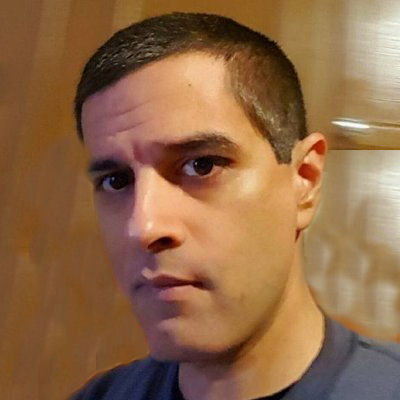
Reporter Interviews Anthony Morse
Chief Executive Officer
Ashby Navis & Tennyson Media Publisher, LLC
Reporter: Anthony, people often describe you as the visionary behind Ashby Navis & Tennyson. Do you think that’s accurate?
Anthony: (Laughs.)
I suppose “curious” is probably a better word.
I’ve always enjoyed asking, “What if?”
Sometimes those questions go nowhere.
Sometimes they become products.
I’ve learned that the only way to find out which is which…is to build them.
Reporter: Is that how the Interactive Literary Business Card began?
Anthony: Pretty much.
It didn’t begin with, “Let’s reinvent the business card.”
It began with a much simpler question.
“What if a conversation could feel like talking to one of the characters from our books?”
That led to another question.
“What if that personality could represent a real business?”
Then another.
“What if every card had its own knowledge?”
Eventually we realized we weren’t building a chat feature anymore.
We were building an entirely new kind of digital identity.
Reporter: This isn’t your first time taking an unconventional path.
Anthony: No.
Back in 2012 I wrote Vampire Music.
I didn’t want it to be just another ebook.
I wondered what would happen if readers heard sounds as they turned the pages.
Hank thought it was worth trying.
He built it.
That was probably the first time we looked at a publishing project and asked, “Why does it have to work the way everyone else says it should?”
We’ve been asking versions of that question ever since.
Reporter: When Barnes & Noble changed direction with the Nook platform, many publishers simply moved on. You didn’t.
Anthony: We pivoted.
We looked at our catalog and thought,
“What can we build with what we already have?”
That led us into public-domain literature.
Today our audiobooks are available in more than thirty-seven countries and have been streamed for millions of minutes.
The platform changed.
The mission didn’t.
Reporter: You’ve built what the team calls “the San Antonio Factory.” Why create your own cloud infrastructure instead of relying entirely on someone else’s?
Anthony: Because we wanted to understand every part of the system.
There’s nothing wrong with cloud services.
We use them where they make sense.
But we also wanted the freedom to design our own architecture to decide how requests move, how personas are managed, how knowledge is stored, and how the different intelligence layers work together.
Building the factory wasn’t just about technology.
It was about independence.
Reporter: People have noticed that your company has developed quite a cast of personalities: Alfred, Sally, Ivy, Flo, Bill. Was that planned?
Anthony: Not really.
At first they were simply different ways of presenting information.
Then they developed voices.
After a while it stopped feeling like we were writing characters.
It felt like we were discovering them.
Now they each explain the company better than a corporate brochure ever could.
Reporter: Hank has described your partnership as one where one of you says, “What if…?” and the other says, “Let’s see if we can build it.” Is that fair?
Anthony: (Smiles.)
That’s probably pretty accurate.
Ideas need two things.
Someone willing to imagine them…
…and someone willing to keep asking whether they’ll make sense to other people.
Hank has a remarkable ability to see the human side of technology.
He’ll ask questions that never occur to me.
Together, those conversations usually lead us somewhere neither of us expected.
Reporter: You’ve managed game stores, worked in bookselling, built games, written books, and now you’re leading an AI platform. Looking back, do those experiences connect?
Anthony: More than people might think.
Whether you’re helping someone find the right novel, recommending a game they’ll enjoy, or designing a new technology, you’re really trying to create an experience they’ll remember.
The tools change.
People don’t.
Reporter: What excites you most about the July 1 launch?
Anthony: Honestly?
Curiosity.
We’ve spent months asking ourselves whether this idea could work.
Now we get to ask a much more interesting question.
“What will people do with it?”
I can’t wait to find out.
Reporter: One last question. If someone asked you what Ashby Navis & Tennyson is really building, what would you say?
Anthony: I’d say we’re building possibilities.
The Interactive Literary Business Card is one product.
The factory is another.
The personas are another.
But underneath all of them is the same idea.
Don’t accept technology as it is.
Ask what it could become.
That’s usually where the interesting work begins.